
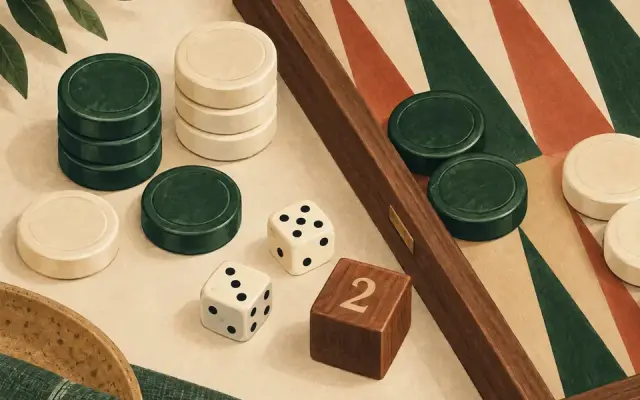
Backgammon
Backgammon rules for beginners: board setup, dice moves, hitting and the bar, bearing off to win — with the 15 opening moves and key terms.
A familiar favourite or something new. Your next game night starts here.
29 games to explore
Search couldn’t load. You can still browse the games below.
Try another game name or clear your filters to explore the library.
Backgammon rules for beginners: board setup, dice moves, hitting and the bar, bearing off to win — with the 15 opening moves and key terms.
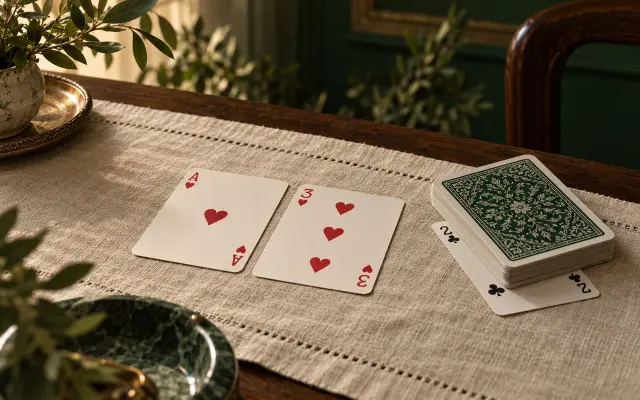
Two-player Briscola rules: prepare a 40-card deck, rank ace and three highest, use trump, draw winner first and count 120 card points to decide the hand.
Also known as Two-player Briscola
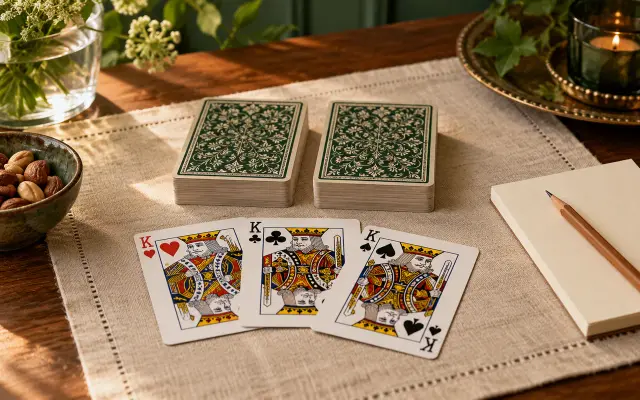
Classic Canasta rules for four players: 11-card hands, partnership melds, frozen discard piles, red threes, going out and scoring a game to 5,000.
Also known as Classic Canasta, Partnership Canasta

Learn CATAN’s 2025 base-game rules for 3–4 players: setup, resource production, trading, building costs, the robber and how to reach 10 victory points.
Also known as Settlers of Catan
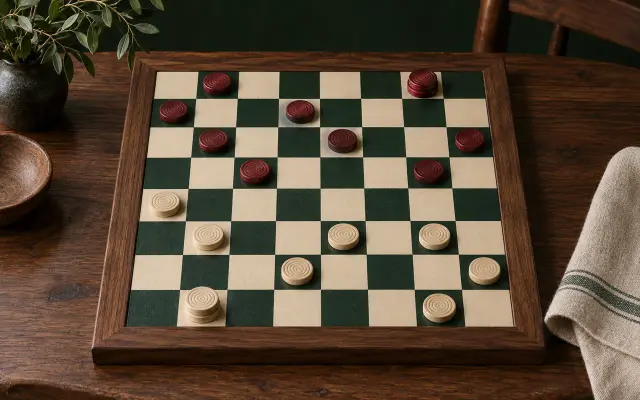
American Checkers rules on an 8×8 board: setup, forward moves, compulsory captures, multiple jumps, crowning, when pieces can move backward and how to win.
Also known as English draughts, Draughts

Beginner chess rules: how to set up the board, how each piece moves, castling, en passant, promotion, checkmate and draws — one clear beginner page.
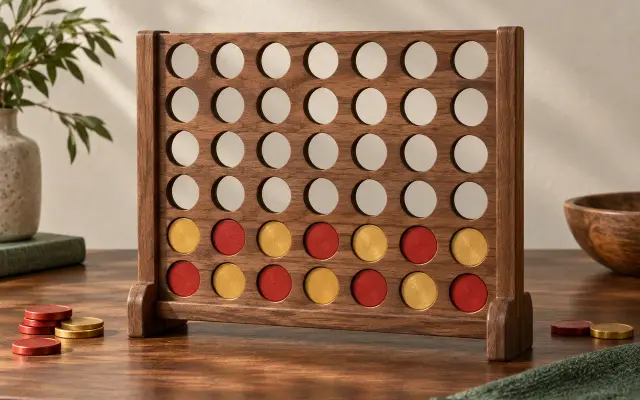
Classic Connect 4 rules: assemble and orient the vertical grid, take turns dropping discs, and make four horizontally, vertically or diagonally.
Also known as Connect Four, Four in a Row, Four-in-a-row
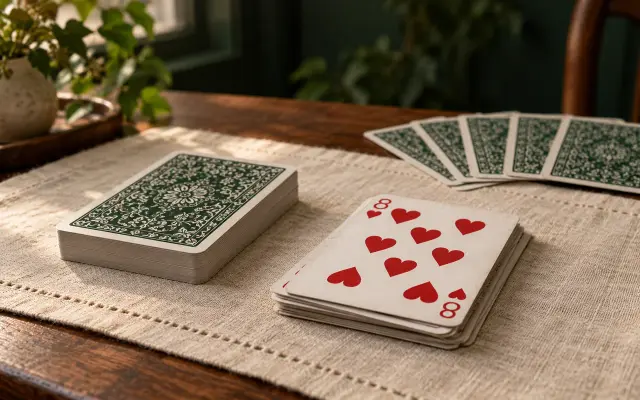
Crazy Eights rules for 2–5 players: deal five cards, match suit or rank, choose a suit with a wild eight, draw until playable and score remaining cards.
Also known as Crazy Eight, Crazy 8s, Crazy 8
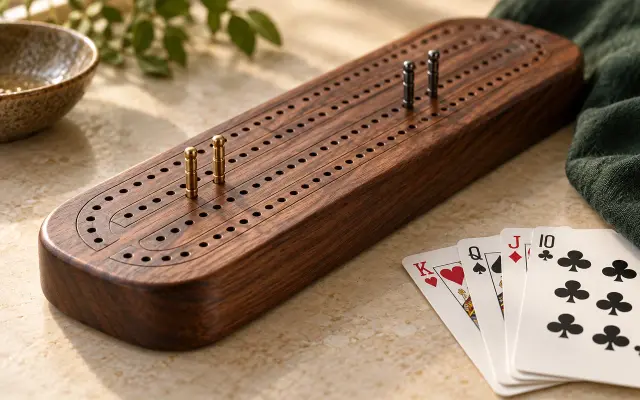
Two-player Cribbage rules with three- and four-player variants: the deal, the crib, the go, and scoring fifteens, pairs, runs and the 29 hand.
Also known as Crib
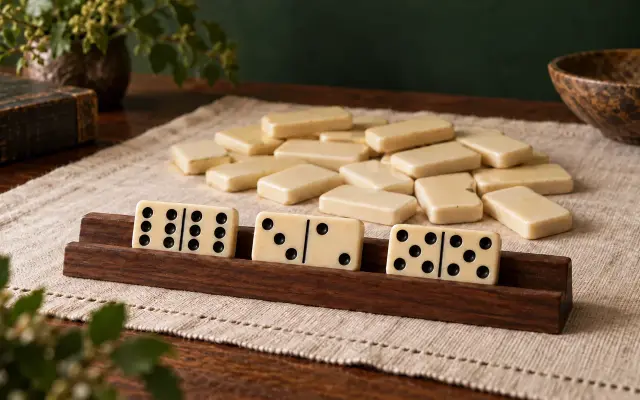
Two-player Draw Dominoes rules with a double-six set: seven tiles each, the first set, matching ends, drawing from the boneyard, blocked hands and scoring to 100.
Also known as Draw game
North American Euchre rules for four players: the 24-card deck, choosing trump, right and left bowers, following suit, going alone and scoring to 10.
Farkle rules with the complete PlayMonster scoring table: rolling and setting aside dice, farkles, hot dice, the 500-point entry and the final round.
Also known as Farkel
Gin Rummy rules for two players: ten-card hands, sets and runs, deadwood, knocking, laying off, going gin, undercuts and scoring a match to 100.
Also known as Gin
Go rules for your first 9x9 game: stones on the board's intersections, liberties and capture, two passes to end, then scoring territory, prisoners and komi.
Also known as Baduk, Weiqi
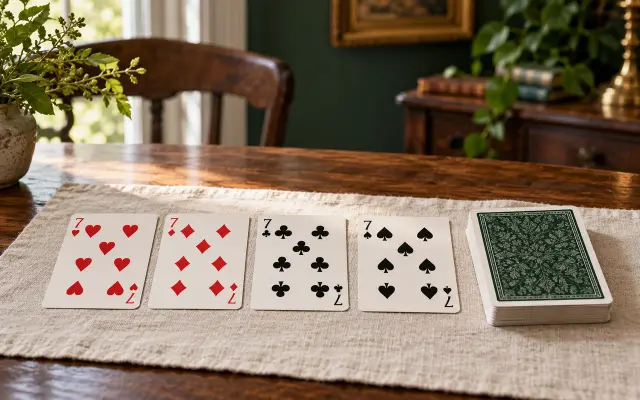
Go Fish rules for 2–5 players: how many cards to deal, asking for ranks, drawing, collecting four-card books and winning when all 13 books are complete.
Also known as GoFish
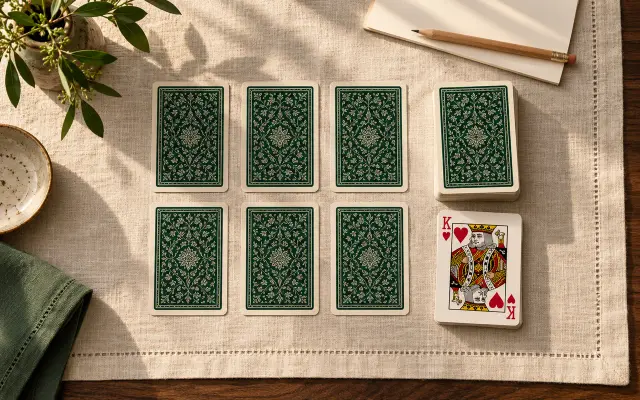
Golf card game rules (six-card golf) for 2–4 players: swap cards to lower your score, match columns, count kings as zero and play nine holes.
Also known as Golf, Six-card Golf, 6 Card Golf, Card Golf
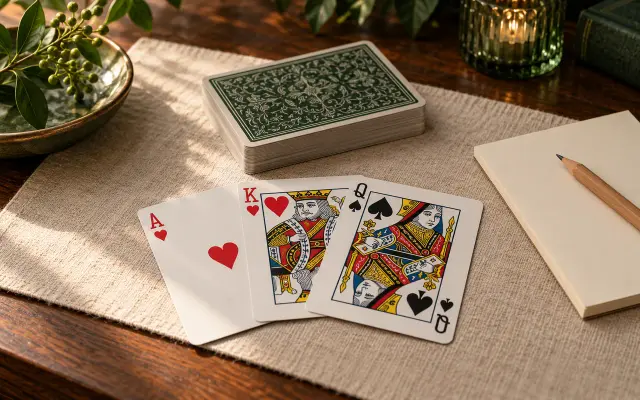
Hearts rules for four players: passing, breaking hearts, shooting the moon and scoring — plus jack of diamonds, 3- and 5-player variants and a glossary.
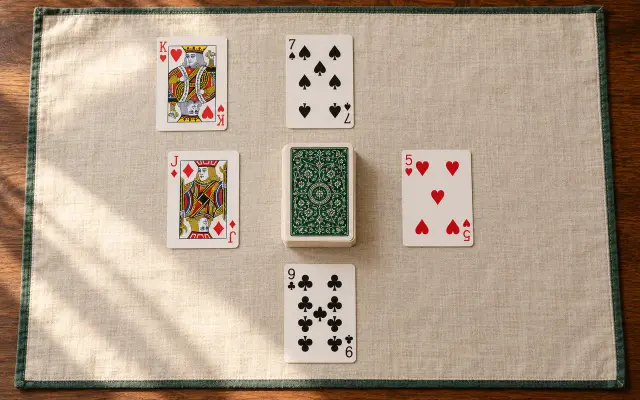
Kings in the Corner rules for 2–4 players: deal seven cards, build alternating-colour piles, place kings in the corners, move piles and score leftover cards.
Also known as Kings Corner, Kings Corners, King’s Corners, Kings in the Corners
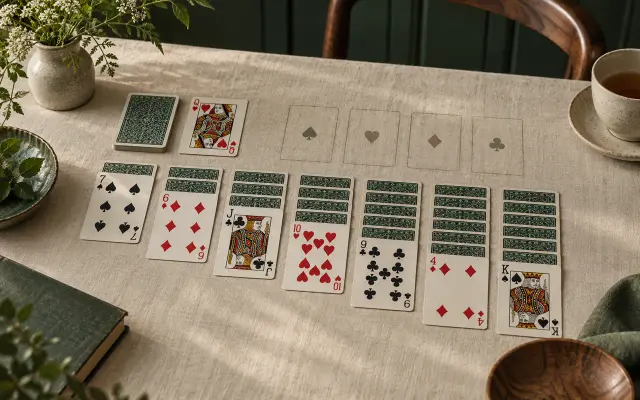
Klondike Solitaire rules for draw one: deal the seven-column tableau, build down in alternating colours, use the stock and move every suit to its foundation.
Also known as Patience, Solitaire

Perudo-style Liar’s Dice rules: hidden rolls, wild ones, legal bid raises, switching to and from ones, challenges, losing dice and elimination.
Also known as Dudo

Kalah Mancala rules with four stones per pit: board setup, counterclockwise sowing, extra turns, opposite-pit captures, the end sweep and winning.
Also known as Kalah
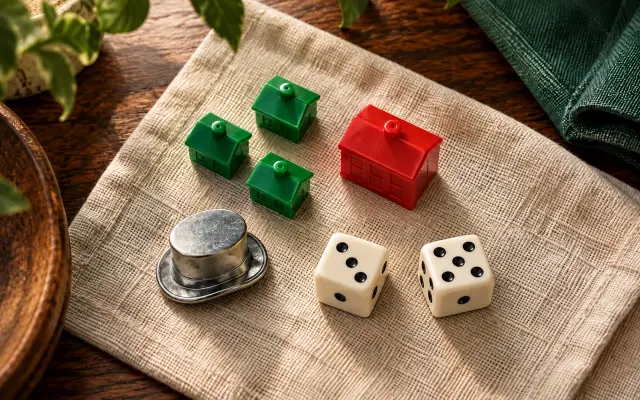
Monopoly Classic rules: starting money, auctions, rent, jail, houses, mortgages and bankruptcy, with examples and house rules clearly separated.
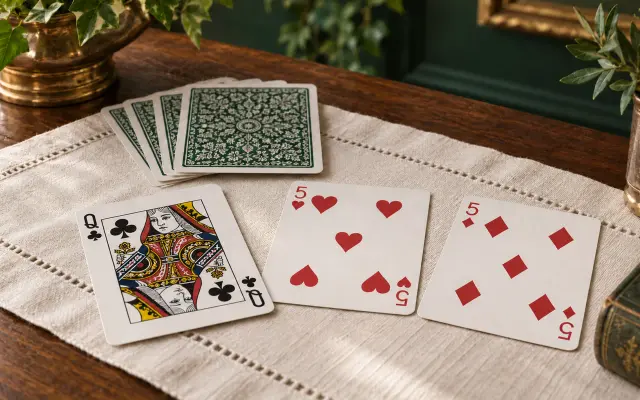
Old Maid rules for 2–5 players: remove one queen, deal 51 cards, discard matching pairs, draw from your neighbour and avoid holding the last queen.
Also known as OldMaid
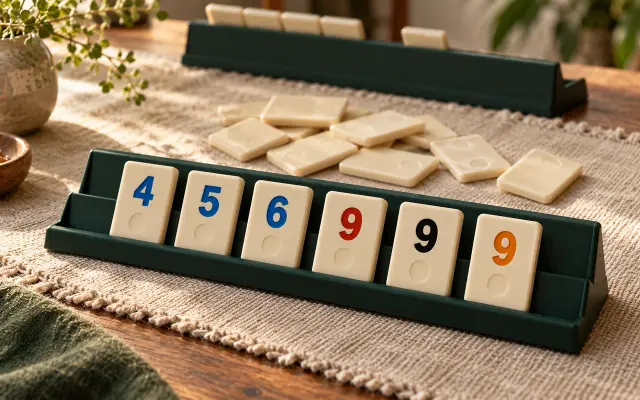
Rummikub Classic rules: groups, runs, the 30-point initial meld, rearranging tiles, retrieving jokers, turn limits and scoring, with examples.
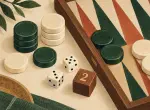 Common mistakesCommon Backgammon mistakes and how to check themAvoid illegal dice use, stranded checkers, broken primes and cube errors with a short turn-by-turn routine.Beginner strategyMake safer choices in BackgammonBefore you move in Backgammon: use the whole roll, weigh points, hits and escapes, and count the risk of leaving a checker exposed.Beginner strategyBackgammon opening movesThe fifteen backgammon opening rolls with standard moves and one-line reasons — plus doubles replies and how to handle the back pair.ScoringBackgammon scoring and the doubling cubeScore singles, gammons and backgammons correctly, then use the cube in a match without mixing in money-play rules.
 Beginner strategyBriscola beginner strategy: points and trumpChoose when to spend trump, concede a trick and protect valuable cards in two-player Briscola, with worked hands and a final-draw example.
 Beginner strategyCanasta beginner strategy: melds, discards and partnersPlan an initial meld, weigh discard-pile pickups, protect natural canastas and decide when to go out in four-player Classic Canasta.Common mistakesCommon Canasta mistakes: frozen piles and going outFix frozen-pile pickups, initial-meld calculations, black-three stops and concealed finishes under four-player Classic Canasta rules.ScoringCanasta scoring: melds, bonuses and hand totalsCalculate Classic Canasta hand scores, opening thresholds, red-three penalties and concealed bonuses with worked partnership examples.
 Beginner strategyCATAN beginner strategy: resources, trades and expansionPlan resource access, compare settlement and city options, trade toward a build and manage robber risk in the 2025 CATAN base game.Common mistakesCommon CATAN mistakes: robber, trades and cardsResolve discards, trading restrictions, settlement placement and development-card timing with examples from the 2025 CATAN base game.ScoringCATAN victory points: cities, bonuses and winningCount CATAN victory points correctly, resolve route and army ties, and check when hidden cards let you win in the 2025 base game.
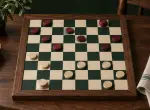 Beginner strategyCheckers beginner strategy: control, trades and kingsPractical American checkers strategy: centre control, back row, forced captures, trading and endgame kings.Common mistakesCommon checkers mistakes and how to avoid themThe errors beginners make in American checkers: missed jumps, unfinished multi-jumps, backward men, crowning timing and setting up opponent shots.ScoringCheckers results: blocked pieces, wins and drawsRecognise a blocked-position win, understand WCDF draw conditions and record a casual match without scoring captured pieces.
 Common mistakesSeven Chess mistakes beginners can catchA practical move-by-move checklist for avoiding loose pieces, unsafe kings and one-move blunders.Beginner strategyYour first ten moves in ChessA practical checklist for your first ten moves in Chess: give every move a job, make room in the centre, look after your king and check before you move.Beginner strategyMake a plan after the Chess openingTurn a playable opening into a simple middlegame plan by improving pieces, reading pawns and limiting counterplay.ScoringChess results: checkmate, draws and match pointsDistinguish checkmate from stalemate, claimed from automatic draws, and piece values from the points awarded for a finished chess game.
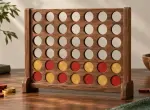 Beginner strategyConnect 4 strategy: centre control and threatsHow to win at Classic Connect 4: the centre column, building double threats, blocking and the odd-even rule.Common mistakesCommon Connect 4 mistakesFrequent Connect 4 errors: unsupported spaces, missed diagonals, ignoring three in a row, and misreading the rules.ScoringConnect Four results: winning lines, draws and matchesCheck legal four-in-a-row wins, distinguish gaps from completed lines, and agree how draws count in a casual Connect Four match.
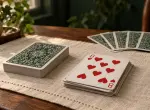 Beginner strategyCrazy Eights strategy: eights, suits and tempoWin more Crazy Eights hands: when to play an eight, which suit to call, what opponents’ draws reveal and how to plan your last card.Common mistakesCommon Crazy Eights mistakes and fixesAvoid the usual Crazy Eights errors: following an eight’s printed suit, playing several cards, adding action cards and scoring eights wrongly.ScoringCrazy Eights scoring: card values and examplesScore a Crazy Eights hand: what each card is worth, how the winner collects opponents’ cards, blocked hands and optional match targets.
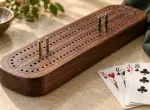 Beginner strategyCribbage strategy for your first gamesChoose discards, plan pegging cards and use board position without trying to memorise every possible hand.Common mistakesCommon Cribbage mistakes in play and scoringCatch illegal totals, missed go points, incorrect runs, crib flush errors and counting-order problems.ScoringCribbage scoring with worked examplesCount pegging, hands and the crib in a fixed order, with examples for fifteens, pairs, duplicate runs, flushes and nobs.
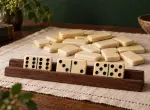 Beginner strategyDraw Dominoes strategy for beginnersPractical Draw Dominoes strategy: opening, doubles, tracking numbers, controlling the ends and managing the boneyard.Common mistakesCommon Draw Dominoes mistakesFrequent Draw Dominoes errors: matching ends, doubles, drawing, blocked hands and pip counting.ScoringDraw Dominoes scoring: dominoes, blocks and pipsHow to count pips in Draw Dominoes: going out, blocked hands, ties and reaching 100 points.
 Beginner strategyEuchre beginner strategy: ordering up, leading and going aloneRules of thumb for calling trump, playing the bowers, leading, defending and going alone in four-player Euchre.Common mistakesCommon Euchre mistakesFrequent Euchre errors: left bower, following suit, ordering up, going alone, scoring and dealer rotation.ScoringEuchre scoring: euchres, marches and going aloneHow points work in Euchre: makers, defenders, marches, lone hands and reaching 10.
 Beginner strategyFarkle strategy: when to bank and when to rollHow risky each roll is in Farkle, when to bank your turn score, and how to use hot dice and the endgame.Common mistakesCommon Farkle mistakesFrequent Farkle errors: combining dice across rolls, keeping non-scoring dice, entry threshold, hot dice and the final round.ScoringFarkle scoring guide: combinations, hot dice and bankingAll Farkle scoring combinations from the PlayMonster table, with worked turns showing entry, farkles and the final round.
 Beginner strategyGin Rummy strategy: deadwood, discards and knockingBeginner Gin Rummy strategy: keeping deadwood low, reading the discard pile, and choosing when to knock, go gin or wait.Common mistakesCommon Gin Rummy mistakesFrequent Gin Rummy errors: invalid melds, aces, knocking limits, laying off, undercuts and mixing bonus systems.ScoringGin Rummy scoring: knock, gin, undercutCount deadwood, apply layoffs, and score knocks, gin and undercuts with worked examples for the 20-point gin ruleset.
 Beginner strategyGo beginner strategy for 9×9 gamesFirst principles for Go: liberties, connection, eyes, territory and playing sensibly on a small board.Common mistakesCommon Go mistakes for beginnersFrequent errors in Go: self-atari, filling own eyes, ko, dead stones at the end, and forgetting komi.
 Beginner strategyGo Fish strategy: what to ask and who to askWin more books in Go Fish: ask for the right ranks, use what opponents reveal, remember who holds what and play the empty-stock endgame.Common mistakesCommon Go Fish mistakes and how to fix themAvoid the usual Go Fish errors: asking for ranks you lack, handing over one card, laying down pairs, stopping early and missing a bonus ask.ScoringGo Fish scoring: books, ties and how to winCount four-card books, see why two players can never tie, and settle shared wins in Go Fish, with worked examples.ScoringGo scoring: how to count a finished gameHow to count territory, prisoners, pass stones and komi at the end of a Go game, with a worked 9×9 example.
 Beginner strategyHearts beginner strategy: passing, ducking and the queenStrategy for four-player Hearts: which cards to pass, how to duck tricks, handle the queen of spades and spot a moon shot.Common mistakesCommon Hearts mistakesFrequent Hearts errors: passing, first-trick rules, breaking hearts, the queen of spades, scoring and moon shots.ScoringHearts scoring and shooting the moonHow Hearts penalties are counted, what a moon shot does, and the game-end rule at 100 points.
 Beginner strategyKlondike Solitaire strategy: how to win more oftenTips for draw-one Klondike: unblocking face-down cards, managing empty columns, foundation timing and the stock.Common mistakesCommon Klondike Solitaire mistakesFrequent Klondike errors: colour and rank, moving runs, empty columns, waste pile access and redeals.ScoringKlondike Solitaire results: winning and tracking gamesCheck a Klondike win, recognise a stalled draw-one game and keep a fair personal record without mixing in timed or Vegas scoring.
 Beginner strategyLiar’s Dice strategy: odds, bidding and bluffingHow to estimate dice counts in Perudo-style Liar’s Dice, choose safe bids, decide when to challenge and bluff.ScoringLiar’s Dice challenges: counting and eliminationCount wild ones, settle exact and overbid challenges, remove the correct die and restart rounds in Perudo-style Liar’s Dice.Common mistakesCommon Liar’s Dice mistakes and bid conversionsFrequent errors in Perudo-style Liar’s Dice: wild ones, bid order, switching to and from ones, and who opens.
 Beginner strategyMancala (Kalah) strategy: extra turns and capturesHow to win at Kalah: plan extra turns, set up captures, defend your pits and time the end of the game.Common mistakesCommon Mancala (Kalah) mistakesFrequent Kalah errors: sowing into the wrong store, missing extra turns, wrong captures and the end-of-game sweep.ScoringMancala scoring: Kalah captures and the end sweepCount captures, remaining stones and the final store totals in four-stone Kalah, with 48-stone checks and worked end-sweep examples.
 Beginner strategyMonopoly beginner strategy: sets, houses and cashBeginner Monopoly strategy for Classic C1009: compare trades, plan building costs, set auction limits and keep enough cash to survive rent.Common mistakesMonopoly common mistakes: auctions, houses and house rulesAvoid common Monopoly Classic mistakes: skipped auctions, Free Parking jackpots, uneven building, missed mortgage charges and incorrect jail rolls.ScoringMonopoly rent, buildings and mortgages: worked examplesWorked Monopoly Classic examples for rent, auctions, even building, hotel sales, mortgage transfers and bankruptcy, using the US C1009 rules.
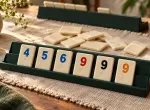 Beginner strategyRummikub beginner strategy: rack planning and manipulationBeginner Rummikub strategy: organise your rack, compare opening melds, find simple table moves and manage the risk of holding a joker.Common mistakesRummikub common mistakes: opening melds and jokersAvoid Rummikub Classic mistakes with opening points, duplicate colours, table manipulation, joker reuse, drawn tiles and unfinished turns.ScoringRummikub initial meld, jokers and scoring: worked examplesWorked Rummikub Classic examples: opening for 30, splitting runs, retrieving and reusing jokers, leftover penalties and blocked-game scoring.
 Beginner strategyRummy strategy: melds, discards and reading opponentsPractical Basic Rummy strategy: which cards to keep, what to discard, how to watch opponents and when to go out.Common mistakesCommon Rummy mistakesFrequent Basic Rummy errors: invalid melds, aces, laying off, discarding, going out and scoring.ScoringRummy scoring explainedHow card values, going out and the winner’s points work in Basic Rummy, with worked hands.
 Beginner strategyScrabble beginner strategy: rack balance and board positionBeginner Scrabble strategy: compare scores and leftover letters, find hooks and short words, use premiums and plan around the final tile adjustments.Common mistakesScrabble common mistakes: premiums, words and rack choicesAvoid Scrabble mistakes with reused premiums, cross-words, blank values, bingo bonuses, rack balance, challenges and endgame adjustments.ScoringScrabble scoring, blanks and challenges: worked examplesWorked Scrabble US Classic examples for letter and word premiums, cross-words, blanks, bingo bonuses, challenges and final tile deductions.
 Beginner strategySpades bidding and play strategyHow to estimate a Spades bid, work with your partner, use nil safely and avoid bags.Common mistakesCommon Spades mistakesFrequent Spades errors: overbidding, bags, nil, leading spades, and mixing up team contracts and scoring.ScoringSpades scoring: contracts, nil and bagsA worked guide to Spades points: making and missing a contract, nil bonuses and the ten-bag penalty.
 Beginner strategyUNO strategy: winning more roundsTips for UNO Classic: managing colours, saving wilds, timing action cards and playing the end of a round.Common mistakesCommon UNO mistakes and how to fix themSort official UNO rules from house rules: drawing, Wild Draw Four challenges, UNO calls and end-of-round scoring.ScoringUNO scoring: card values and the 500-point gameScore UNO Classic rounds, count last-card draw penalties and compare winner-takes-points with Mattel’s alternative scoring system.
 Beginner strategyYahtzee strategy: what to keep and where to scoreWhich dice to keep, how to chase the upper bonus, when to take a zero and how to use Chance and Yahtzee in Classic Yahtzee.Common mistakesCommon Yahtzee mistakesFrequent Classic Yahtzee errors: roll limits, category scoring, straights, full house, upper bonus and Joker rules.ScoringYahtzee scoring and the Joker ruleScore every box correctly, earn the 35-point upper bonus, and place extra Yahtzees under the Joker rule with worked examples.
Backgammon rules for beginners: board setup, dice moves, hitting and the bar, bearing off to win — with the 15 opening moves and key terms.
Two-player Briscola rules: prepare a 40-card deck, rank ace and three highest, use trump, draw winner first and count 120 card points to decide the hand.
Also known as Two-player Briscola
Classic Canasta rules for four players: 11-card hands, partnership melds, frozen discard piles, red threes, going out and scoring a game to 5,000.
Also known as Classic Canasta, Partnership Canasta
Learn CATAN’s 2025 base-game rules for 3–4 players: setup, resource production, trading, building costs, the robber and how to reach 10 victory points.
Also known as Settlers of Catan
American Checkers rules on an 8×8 board: setup, forward moves, compulsory captures, multiple jumps, crowning, when pieces can move backward and how to win.
Also known as English draughts, Draughts
Beginner chess rules: how to set up the board, how each piece moves, castling, en passant, promotion, checkmate and draws — one clear beginner page.
Classic Connect 4 rules: assemble and orient the vertical grid, take turns dropping discs, and make four horizontally, vertically or diagonally.
Also known as Connect Four, Four in a Row, Four-in-a-row
Crazy Eights rules for 2–5 players: deal five cards, match suit or rank, choose a suit with a wild eight, draw until playable and score remaining cards.
Also known as Crazy Eight, Crazy 8s, Crazy 8
Two-player Cribbage rules with three- and four-player variants: the deal, the crib, the go, and scoring fifteens, pairs, runs and the 29 hand.
Also known as Crib
Two-player Draw Dominoes rules with a double-six set: seven tiles each, the first set, matching ends, drawing from the boneyard, blocked hands and scoring to 100.
Also known as Draw game
North American Euchre rules for four players: the 24-card deck, choosing trump, right and left bowers, following suit, going alone and scoring to 10.
Farkle rules with the complete PlayMonster scoring table: rolling and setting aside dice, farkles, hot dice, the 500-point entry and the final round.
Also known as Farkel
Gin Rummy rules for two players: ten-card hands, sets and runs, deadwood, knocking, laying off, going gin, undercuts and scoring a match to 100.
Also known as Gin
Go rules for your first 9x9 game: stones on the board's intersections, liberties and capture, two passes to end, then scoring territory, prisoners and komi.
Also known as Baduk, Weiqi
Go Fish rules for 2–5 players: how many cards to deal, asking for ranks, drawing, collecting four-card books and winning when all 13 books are complete.
Also known as GoFish
Golf card game rules (six-card golf) for 2–4 players: swap cards to lower your score, match columns, count kings as zero and play nine holes.
Also known as Golf, Six-card Golf, 6 Card Golf, Card Golf
Hearts rules for four players: passing, breaking hearts, shooting the moon and scoring — plus jack of diamonds, 3- and 5-player variants and a glossary.
Kings in the Corner rules for 2–4 players: deal seven cards, build alternating-colour piles, place kings in the corners, move piles and score leftover cards.
Also known as Kings Corner, Kings Corners, King’s Corners, Kings in the Corners
Klondike Solitaire rules for draw one: deal the seven-column tableau, build down in alternating colours, use the stock and move every suit to its foundation.
Also known as Patience, Solitaire
Perudo-style Liar’s Dice rules: hidden rolls, wild ones, legal bid raises, switching to and from ones, challenges, losing dice and elimination.
Also known as Dudo
Kalah Mancala rules with four stones per pit: board setup, counterclockwise sowing, extra turns, opposite-pit captures, the end sweep and winning.
Also known as Kalah
Monopoly Classic rules: starting money, auctions, rent, jail, houses, mortgages and bankruptcy, with examples and house rules clearly separated.
Old Maid rules for 2–5 players: remove one queen, deal 51 cards, discard matching pairs, draw from your neighbour and avoid holding the last queen.
Also known as OldMaid
Rummikub Classic rules: groups, runs, the 30-point initial meld, rearranging tiles, retrieving jokers, turn limits and scoring, with examples.
Basic rummy rules: the deal (10, 7 or 6 cards), drawing and discarding, melding sets and runs, laying off on melds, and scoring when someone goes out.
Also known as Straight Rummy, Basic Rummy

Scrabble US Classic rules: legal word placement, premium squares, blanks, exchanges, challenges, seven-tile bonuses and final scoring.
Partnership Spades rules for four players: bidding, following suit, breaking trump, nil bids, contract scoring, overtricks and the ten-bag penalty.
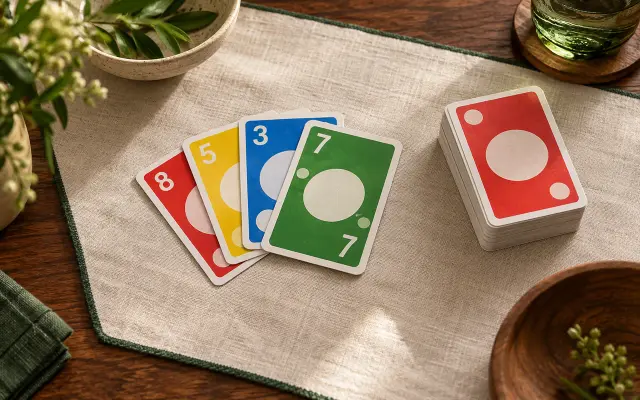
UNO rules for the current 112-card Classic deck: matching cards, action cards, Wild Draw Four challenges, calling UNO and scoring to 500 points.
Also known as Uno
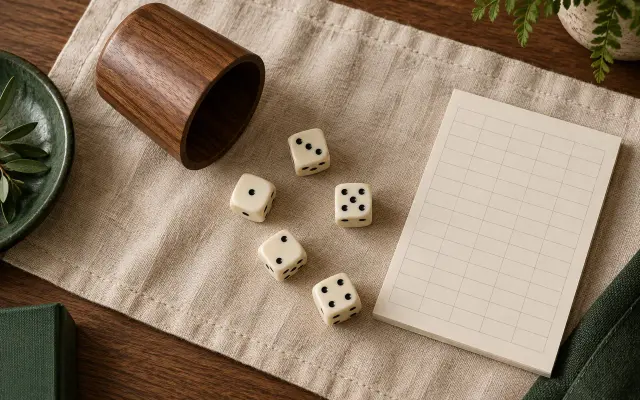
Classic Yahtzee rules and scoring: three rolls per turn, all 13 categories, the 35-point upper bonus, extra Yahtzee bonuses and Joker rules.