
Make a plan after the Chess opening
Turn a playable opening into a simple middlegame plan by improving pieces, reading pawns and limiting counterplay.
On this page
The opening does not end with an announcement. It fades into the middlegame once pieces are active, the kings have made a safety decision, and the central pawn structure gives both sides longer-term targets. When you no longer recognise a memorised move, use the position itself.
Deal with tactics first
A strategic plan is useful only when no forcing move overrides it. Start every turn by checking the opponent’s threat, then scan checks, captures, and direct threats for both sides. If a piece is hanging or the king is exposed, solve that problem before improving your position.
Improve the least useful piece
Find the piece contributing the least. It may be a bishop blocked by its own pawns, a rook trapped behind undeveloped pieces, or a knight on the edge with few safe squares.
Ask where that piece would do a useful job. A better square should attack a target, defend an important pawn, control an open line, or support a pawn break. “Move it somewhere active” is too vague; name the job first.
Read the pawn structure
Pawns show where space and open lines may appear because they cannot move backward.
- A locked pawn chain points toward the side where you have more room to manoeuvre.
- An isolated or backward pawn can become a target, but only if your pieces can attack it safely.
- A pawn break challenges the chain and may open a file or diagonal. Check what the opponent gains from the same opening.
- Passed pawns grow more important as pieces are exchanged and the endgame approaches.
Do not push a pawn merely because no piece move looks exciting. Pawn moves create squares and weaknesses for both sides.
Put rooks on useful files
Rooks become stronger on open files, half-open files, and behind passed pawns. Connect them by moving the queen and completing minor-piece development. Then ask whether entering the opponent’s position is safe; controlling a file is useful even when immediate invasion is impossible.
Avoid placing both rooks on a closed file with no realistic pawn break. The file must support the plan, not just look tidy.
Choose a target you can reach
A target may be an undefended piece, a weak pawn, an exposed king, or a square the opponent cannot protect with a pawn. Count how many pieces can attack it and how many defenders can arrive.
If you cannot add another attacker, improve a piece or create a second weakness elsewhere. Repeating harmless attacks on a well-defended target only gives the opponent time.
Restrict the opponent’s plan
Ask what your opponent would play with a free move. Can you prevent a pawn break, trade their best piece, or take away an entry square? A move that improves your position and limits theirs is often easier to trust than a speculative attack.
Use a three-part plan
When the position feels quiet, write the plan mentally:
- Problem: My queen’s bishop is blocked.
- Route: Move the queen, develop the bishop, then connect the rooks.
- Opponent’s reply: Watch for the central pawn break while spending those moves.
Recheck after every opponent move. Plans are temporary explanations of the position, not commitments you must obey after the board changes.
Continue learning
Similar games
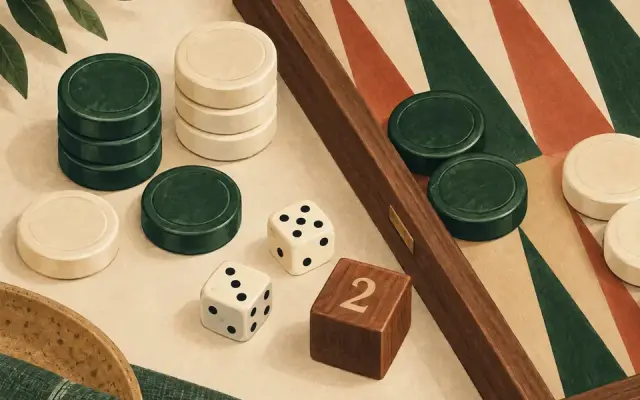
Backgammon
Backgammon rules for beginners: board setup, dice moves, hitting and the bar, bearing off to win — with the 15 opening moves and key terms.
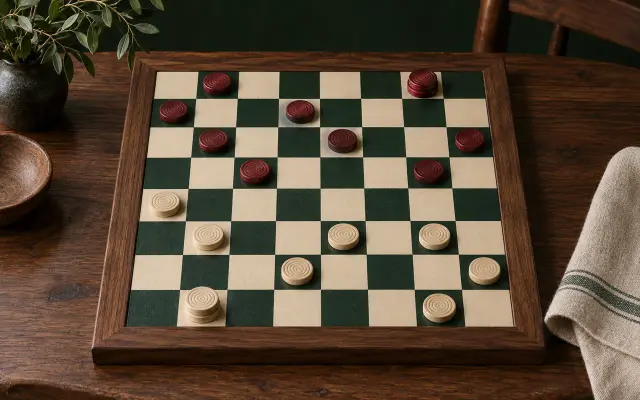
Checkers
American Checkers rules on an 8×8 board: setup, forward moves, compulsory captures, multiple jumps, crowning, when pieces can move backward and how to win.
Also known as English draughts, Draughts
Connect 4
Classic Connect 4 rules: assemble and orient the vertical grid, take turns dropping discs, and make four horizontally, vertically or diagonally.
Also known as Connect Four, Four in a Row, Four-in-a-row