
Standard chess
How to play Chess
Beginner chess rules: how to set up the board, how each piece moves, castling, en passant, promotion, checkmate and draws — one clear beginner page.
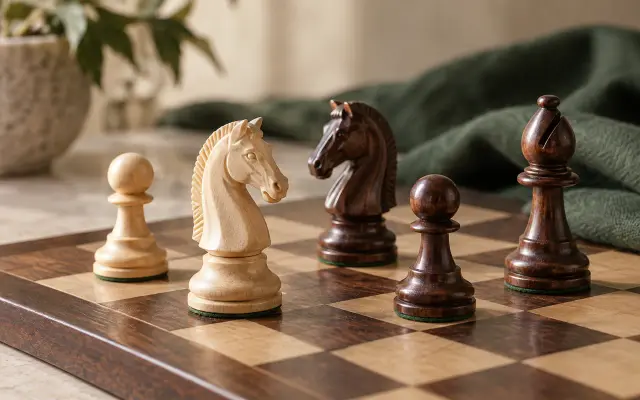
On this page
Quick reference
At the table
Ruleset: Standard chess
- Goal
- Checkmate the opposing king so it has no legal escape.
- Setup
- Light square on each player’s right; queens on their own colour. Pawns fill the second rank.
- Turn
- White moves first, then alternate one legal move each. Never leave your own king attacked.
- Scoring
- There are no points. Checkmate wins; stalemate is a draw.
- End of game
- Checkmate wins. Draws include stalemate, agreement, threefold repetition and the 50-move rule.
Objective
Checkmate the other king: attack it so there is no legal escape. Kings are never captured.
Setup
Place a light corner square on each player’s right. From left to right, White’s back rank is rook, knight, bishop, queen, king, bishop, knight, rook. Black mirrors this. Each queen starts on her own colour. Pawns fill the next rank.
Turns
White starts. Move one piece each turn; capture by landing on an enemy piece. Never leave your king attacked. Except knights, pieces cannot jump.
| Piece | Movement |
|---|---|
| King | One square in any direction, into safety |
| Queen | Any distance along a rank, file, or diagonal |
| Rook | Any distance horizontally or vertically |
| Bishop | Any distance diagonally |
| Knight | Two squares in one direction and one sideways; can jump |
| Pawn | One square forward; optionally two from its starting square if clear. Captures one square diagonally forward |
Special moves
Promotion: a pawn reaching the far rank becomes a queen, rook, bishop, or knight.
Castling: move the king two squares toward a rook and move that rook beside it, across the king. Neither piece may have moved; the path must be empty. The king cannot start in check, cross an attacked square, or finish in check.
En passant: immediately after an opposing pawn advances two squares and lands beside yours, your pawn may capture it as though it advanced one.
Winning
Checkmate wins. Stalemate—no legal move while not in check—is a draw. A position where no possible legal sequence can produce mate is also drawn. Players may agree a draw. You may claim a draw on the third occurrence of the same position (same player to move and legal possibilities), or after 50 moves by each player without a pawn move or capture. Fivefold repetition or 75 such moves by each player draws automatically; checkmate on the final move takes precedence. Consult FIDE for formal claim procedures.
Beginner tips
Develop knights and bishops, contest the centre, and keep your king safe. Before moving, check what your opponent threatens.
Common questions
Can a king move next to the other king?
No. Each king attacks the surrounding squares.
Must I capture an attacking piece?
No. You can also move your king or block the attack, when legal.
Can a pawn move backwards in Chess?
No. Pawns move forward and capture one square diagonally forward. They cannot move or capture backwards.
Learn this game
Beginner strategy
 Beginner strategyYour first ten moves in ChessA practical checklist for your first ten moves in Chess: give every move a job, make room in the centre, look after your king and check before you move.Beginner strategyMake a plan after the Chess openingTurn a playable opening into a simple middlegame plan by improving pieces, reading pawns and limiting counterplay.
Similar games
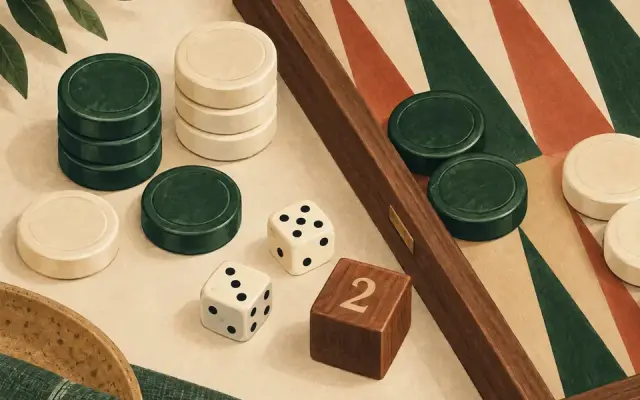
Backgammon
Backgammon rules for beginners: board setup, dice moves, hitting and the bar, bearing off to win — with the 15 opening moves and key terms.
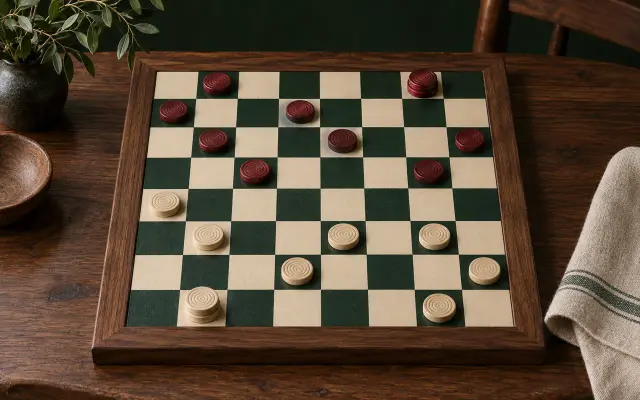
Checkers
American Checkers rules on an 8×8 board: setup, forward moves, compulsory captures, multiple jumps, crowning, when pieces can move backward and how to win.
Also known as English draughts, Draughts
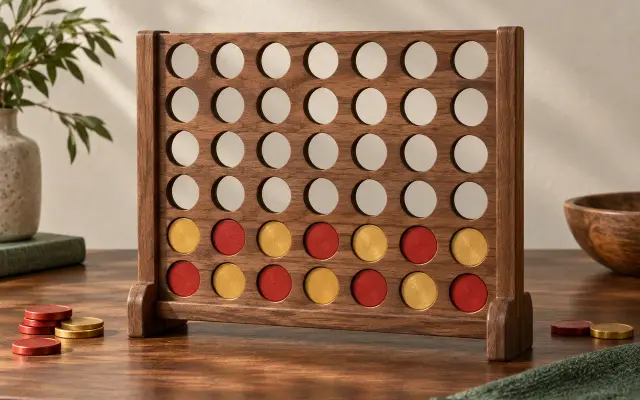
Connect 4
Classic Connect 4 rules: assemble and orient the vertical grid, take turns dropping discs, and make four horizontally, vertically or diagonally.
Also known as Connect Four, Four in a Row, Four-in-a-row