
Monopoly Classic C1009, US 2–6-player edition
How to play Monopoly
Independent rules summary
Monopoly Classic rules: starting money, auctions, rent, jail, houses, mortgages and bankruptcy, with examples and house rules clearly separated.
On this page
Quick reference
At the table
Ruleset: Monopoly Classic C1009, US 2–6-player edition
- Goal
- Remain in the game after every opponent goes bankrupt.
- Setup
- Each player starts on GO with 1,500; the banker holds unsold deeds and buildings.
- Turn
- Roll two dice, move and resolve the space. Doubles give another roll, except when leaving jail.
- Scoring
- Use the deed for rent and building prices. GO pays 200; Free Parking pays nothing.
- End of game
- A player unable to settle a debt after raising money is eliminated. Last remaining player wins.
Objective
Outlast the other players by buying property and collecting rent. Owning the most cash midway through play does not end the game: the winner is the last player who has not gone bankrupt.
This page follows the US 2–6-player C1009 Classic edition. Names and currency symbols vary between countries. Use your own board and deeds for printed prices; themed, electronic-banking and older editions may change rules.
Setup
Choose a banker, who may also play but must keep personal money separate. Give each player 1,500: two 500s, four 100s, one 50, one 20, two 10s, one 5 and five 1s. The bank keeps the remaining money, unsold deeds and buildings.
Shuffle Chance and Community Chest separately and place them face down. Each player puts a token on GO. Everyone rolls both dice; the highest total starts, with play passing left.
Turns
Roll both dice, move clockwise by their total and resolve your destination. Doubles normally give another roll after resolving the space. On your third consecutive doubles roll, go directly to jail without making that move. Being sent to jail ends your turn.
Buying and auctions
On an unowned street, railroad or utility, either pay its printed price and take its deed, or let the banker auction it. Everyone may bid, including the player who declined to buy. Bidding begins at 10 and may increase by as little as 1; bidding need not follow turn order. The highest bidder pays the bank. If nobody bids, the bank keeps the deed.
Rent and board spaces
On another player’s property, pay the rent on the deed if the owner asks before the next player rolls. Mortgaged property collects no rent. A complete colour set doubles rent on its undeveloped, unmortgaged streets, even if another street in that set is mortgaged.
Railroad rent depends on how many the owner holds: 25, 50, 100 or 200 for one through four. For utilities, roll the dice to determine rent: multiply the total by four if the owner holds one utility, or ten if they hold both. Mortgaged railroads and utilities still count toward the increased rent on the owner’s unmortgaged ones. Follow a movement card’s special rent instruction when it differs.
- GO: collect 200 when passing or landing on it, unless sent directly to jail.
- Chance or Community Chest: draw, follow the card and return it underneath its deck. Keep a Get Out of Jail Free card until used or traded.
- Tax: pay the amount on the space to the bank.
- Free Parking: nothing happens; there is no cash jackpot.
- Just Visiting: landing here normally does not put you in jail.
Jail
Go directly to jail when a space or card says so, or after three consecutive doubles. Do not collect GO money on that move. While jailed, you may still collect rent, trade, mortgage, bid and buy buildings.
At the start of a later turn, pay 50 or use a Get Out of Jail Free card, then roll and move normally. Alternatively, try to roll doubles. Success releases you: move by that roll but do not roll again. After three failed attempts, pay 50 and move by the third roll.
Buildings, trades and mortgages
You may buy houses as soon as you own a complete colour set, even between turns, provided none of its streets is mortgaged. Pay each deed’s building price and build evenly: every street must have one house before any gets a second. Four houses on every street allow hotel upgrades; pay the hotel price and return that street’s four houses. One hotel is the maximum per street.
Buildings are limited to those in the box. If competing buyers want the last available building, auction it. If none remain, wait for some to return to the bank; do not substitute extra counters.
Trade property, money and Get Out of Jail Free cards at agreed prices. Before trading a street, sell every building in its colour set to the bank. Buildings cannot be traded directly. Players cannot lend each other money or agree to waive rent.
Sell houses back evenly for half their cost. Selling a hotel returns half its upgrade cost and exchanges it for four houses; those houses can then be sold evenly. To mortgage a property, first sell all buildings in its colour set. Turn the deed face down and collect its mortgage value. To lift the mortgage, pay that value plus 10%. Someone receiving a mortgaged deed must immediately lift the mortgage or pay 10% interest to retain it; lifting it later still costs the mortgage value plus 10%.
Worked example
You own three streets with houses distributed 1–1–1. You may buy another house for any street, giving 2–1–1. You cannot build 3–1–1: buy a second house on both remaining streets first. Each purchase still costs the amount on that street’s deed.
Winning
When you owe more cash than you have, raise money by selling buildings and mortgaging property. If you still cannot pay, you are bankrupt and leave the game.
If the debt is to another player, transfer your remaining assets and Get Out of Jail Free cards to that creditor after selling buildings back to the bank. The mortgage-transfer charges apply. If the debt is to the bank, return your properties for immediate auction, cancel their mortgages and return jail cards to their decks. Continue until one player remains.
Common mistakes
- Skipping an auction when someone declines a property.
- Collecting a Free Parking pot or paying extra for landing exactly on GO.
- Building unevenly or borrowing extra houses when the bank runs out.
- Collecting rent on mortgaged property.
- Taking another roll after doubles release you from jail.
Variants
Free Parking jackpots, player loans and immunity from rent are house rules. Older editions may use different tax options or rent-claim deadlines. Monopoly Deal, Monopoly Junior and electronic-banking editions need their own instructions; they are not this ruleset.
Common questions
How much money do you start with in Monopoly?
Each player starts with 1,500 in this US Classic edition. Keep the banker’s personal money separate from the bank.
Do you get money on Free Parking in Monopoly?
No. Nothing happens on Free Parking under Classic rules. A jackpot made from taxes or fines is a house rule.
Can you collect rent while in jail in Monopoly?
Yes. Being in jail does not stop you collecting rent, trading, mortgaging property, bidding in auctions or buying buildings.
What happens if you do not buy a property in Monopoly?
The banker auctions it to the highest bidder. Everyone may bid, including the player who declined the printed price. If nobody bids, the bank keeps the deed.
Learn this game
Similar games
Backgammon
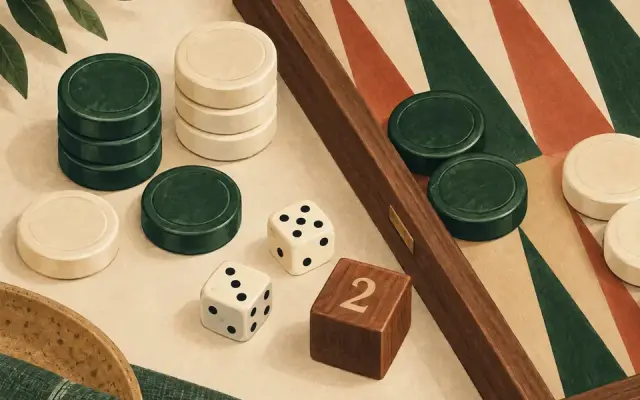
Backgammon rules for beginners: board setup, dice moves, hitting and the bar, bearing off to win — with the 15 opening moves and key terms.

CATAN
Learn CATAN’s 2025 base-game rules for 3–4 players: setup, resource production, trading, building costs, the robber and how to reach 10 victory points.
Also known as Settlers of Catan
Checkers
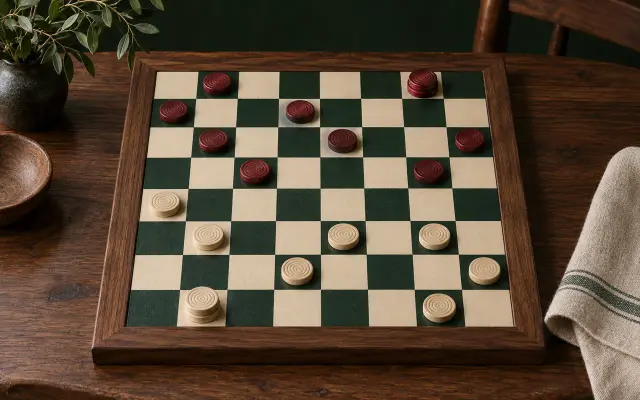
American Checkers rules on an 8×8 board: setup, forward moves, compulsory captures, multiple jumps, crowning, when pieces can move backward and how to win.
Also known as English draughts, Draughts