
Monopoly beginner strategy: sets, houses and cash
Beginner Monopoly strategy for Classic C1009: compare trades, plan building costs, set auction limits and keep enough cash to survive rent.
On this page
This guide uses the US Classic C1009 edition on our Monopoly rules page. The decision checks below are practical advice inferred from those rules, not a promise of winning or a ranking of the best colour sets.
Buy with a purpose
Before buying a deed, ask what it does for your position. Does it complete a set, give you something another player wants, or produce income while you work toward a set? A scattered collection can have trading value, but count the cash left after each purchase.
Price the whole trade
Look at both players’ positions after the exchange. Completing your set may also give your opponent a set they can develop immediately. Compare the building money each player will have left, not just the printed property prices.
For example, you have 500 and a trade costs you 150 in cash. You retain 350. If your three-street set costs 50 per house, one house on each street costs another 150, leaving 200. Decide whether that reserve fits the rents you might face before accepting.
Compare the next building level
Read the rent schedule before spending. On the US Oriental Avenue deed, rent rises from 30 with one house to 90 with two and 270 with three. These increases show why the number of houses matters; they do not prove that every set should always have three houses.
Compare the next legal round of building with its cost and your remaining cash. Account for the other streets you must improve to keep the set even.
Set a bidding limit
Choose a ceiling before an auction gathers momentum. Include any building or mortgage costs in your plan. Passing your limit to deny a rival a bargain can leave you unable to develop the property you just won.
Keep a cash reserve that fits the board
A fixed reserve is not suitable for every position. Check opponents’ developed streets and your route around the board. Money tied up in buildings is costly to recover; repeated building and selling can undo your progress.
Reconsider hotels and jail
A hotel upgrade returns houses to the bank, making them available to rivals. Weigh that consequence against the higher rent rather than upgrading automatically.
Early in the game, moving around can help you acquire unowned deeds. Later, when expensive rents dominate, using the permitted jail attempts can reduce exposure while your properties keep earning. Your choice depends on the board; jail is not always good or always bad.
For the procedures behind these decisions, use the rent, buildings and mortgages walkthrough.
Continue learning
Similar games
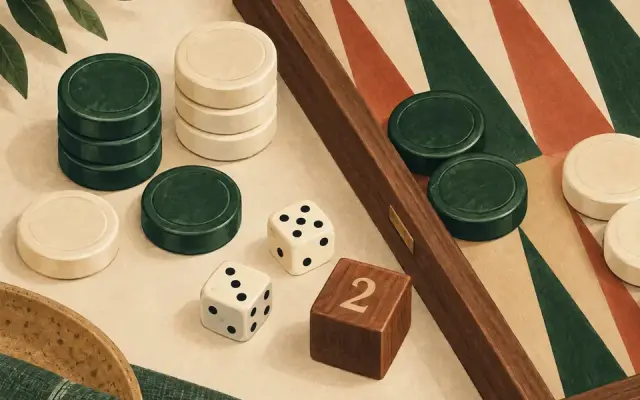
Backgammon
Backgammon rules for beginners: board setup, dice moves, hitting and the bar, bearing off to win — with the 15 opening moves and key terms.

CATAN
Learn CATAN’s 2025 base-game rules for 3–4 players: setup, resource production, trading, building costs, the robber and how to reach 10 victory points.
Also known as Settlers of Catan
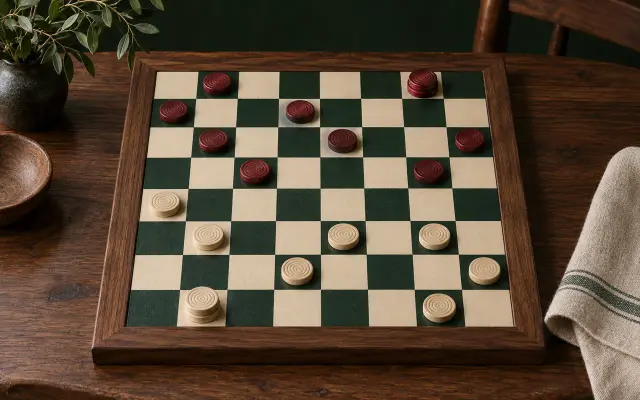
Checkers
American Checkers rules on an 8×8 board: setup, forward moves, compulsory captures, multiple jumps, crowning, when pieces can move backward and how to win.
Also known as English draughts, Draughts