
UNO strategy: winning more rounds
Tips for UNO Classic: managing colours, saving wilds, timing action cards and playing the end of a round.
On this page
UNO combines random draws with choices about what to play. This guide uses the current Classic rules from our UNO rules page: no stacking, one draw per turn, and Wild Draw Four only when you have no card of the current colour.
Plan your colours
Count the colours in your hand. When you play a Wild, or a card that lets you choose the colour, name the colour you hold the most of. That keeps your options open and makes later turns easier.
Try to keep at least two colours. A hand of only one colour can be blocked when the colour changes.
Save your Wilds
Ordinary Wild cards can be played on your turn even when you have another playable card, so they are useful late in the round. Keep them for when you have no other good play, or for when you need to change to a colour you hold.
Get rid of high-value cards first
A hand with 50-point Wilds or 20-point action cards is dangerous if another player goes out. If you have a choice, play the high-value cards before the low ones, unless you need the Wild to escape a bad colour.
Use action cards well
- Skip and Draw Two are strongest when the next player has few cards, because they stop the player near going out.
- Reverse is useful to move the turn away from a threatening player, or to hand the turn to a player with many cards.
- Draw Two is worth the most when the next player is on one or two cards.
Save the strongest attack cards for the moment an opponent is about to win.
Watch your opponents
Note the colour an opponent chooses after a Wild and the colours they draw for. If a player draws when the colour is red, they may lack a red card, although drawing voluntarily is legal. Change the colour to that suit.
The last two cards
- Say “UNO” when you play your next-to-last card, before the next player begins their turn.
- Try to keep a Wild or a flexible card as your last one, so you can go out whatever the colour is.
Wild Draw Four
You may play it only when you have no card matching the current colour. A player can challenge it. If you have a matching-colour card and play it anyway, you risk drawing four cards. Play it only when it’s legal.
Continue learning
Similar games
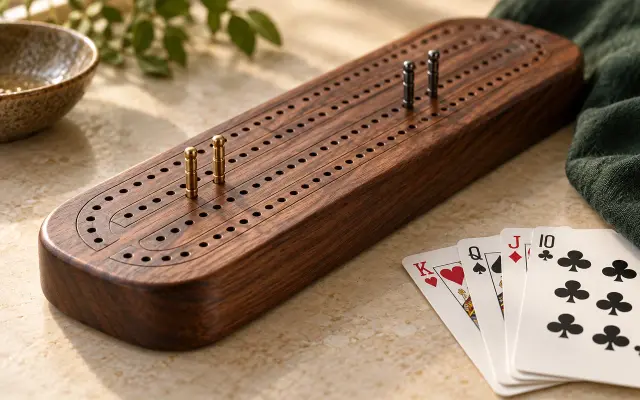
Cribbage
Two-player Cribbage rules with three- and four-player variants: the deal, the crib, the go, and scoring fifteens, pairs, runs and the 29 hand.
Also known as Crib
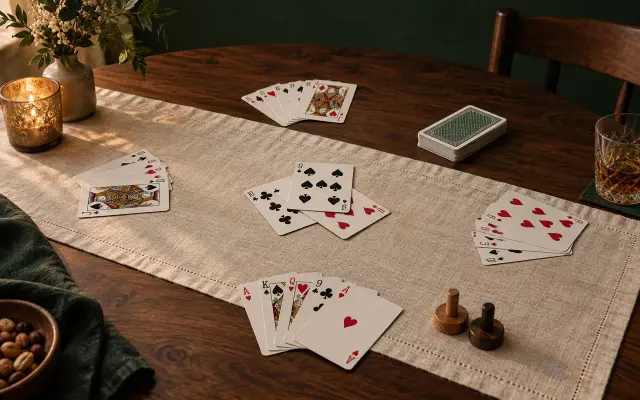
Euchre
North American Euchre rules for four players: the 24-card deck, choosing trump, right and left bowers, following suit, going alone and scoring to 10.
Gin Rummy
Gin Rummy rules for two players: ten-card hands, sets and runs, deadwood, knocking, laying off, going gin, undercuts and scoring a match to 100.
Also known as Gin