
Checkers results: blocked pieces, wins and draws
Recognise a blocked-position win, understand WCDF draw conditions and record a casual match without scoring captured pieces.
On this page
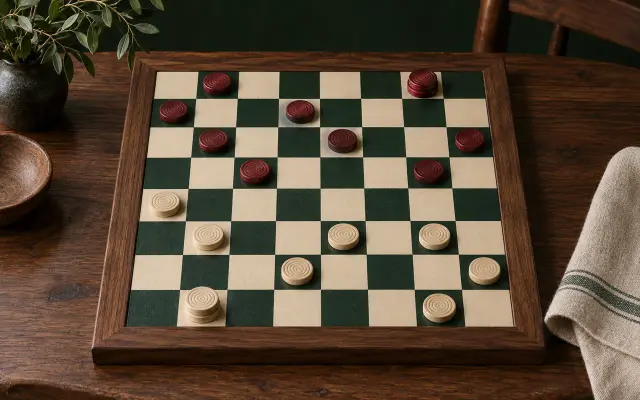
In American Checkers or English draughts, captured pieces are not points. A game ends in a win or draw. This guide uses WCDF’s 8×8 rules and distinguishes the board result from any points a match organiser chooses to award.
Check legal moves at the start of the turn
You lose if none of your pieces can make a legal move when your turn arrives. That can happen because all were captured or because the pieces that remain are blocked.
The number of pieces is therefore not a scoring shortcut. A player with four blocked men can lose to a player with one mobile king. Conversely, being behind in pieces does not end the game while legal moves remain.
When checking mobility, remember that a capture is compulsory. A legal jump is a move even if no ordinary diagonal step is available. Men move and capture forward only; kings may move and capture in either diagonal direction.
A win does not require capturing the last piece
Suppose the opposing player still has two uncrowned men. If every forward destination is occupied or outside the board and neither man has a legal jump, that player has no move and loses.
Do not award a draw just because pieces remain. In checkers, a blocked side loses. That differs from chess stalemate, so the chess ending rule should not be imported.
Promotion is not a score bonus. A man reaching the far row becomes a king and ends its turn in this ruleset. It gains backward movement on a later turn, not an extra jump immediately after crowning.
Resignation and agreement
A player may resign, giving the other player the win. Both may also agree to a draw. Merely offering a draw does not end play if the other player declines it.
For a casual untimed game, agreement is the simplest way to finish a position in which both players see no useful progress. Do not declare yourself the winner because you have more kings when time or patience runs out.
Formal WCDF draw conditions
WCDF rule 1.32 also provides referee-based draw conditions. A player can demonstrate that their next move would create the same position for a third time. Another condition requires showing that, during each player’s previous 40 moves, no uncrowned man has advanced toward the king row and no piece has been removed.
That is not “40 total turns between us,” and it is not a fixed number of king moves regardless of captures. Records and a referee matter in formal play. Event rules also govern clocks and adjudication; follow those rather than inventing a shorter draw limit during a game.
Record a casual series clearly
You can simply keep columns for wins, draws and losses. If both players prefer numerical points, agree a house match convention such as one point per win and half a point per draw before starting. This is a suggested record, not a claim about WCDF event scoring.
With that agreed convention, two wins, one draw and one loss total 2½ points from four games. Capturing twelve pieces in a win still earns the agreed one point, not twelve.
Alternate the starting colour across casual games, and keep the legal move rules unchanged. For forced jumps and crowning reminders, see Checkers common mistakes.
Continue learning
Similar games
Backgammon
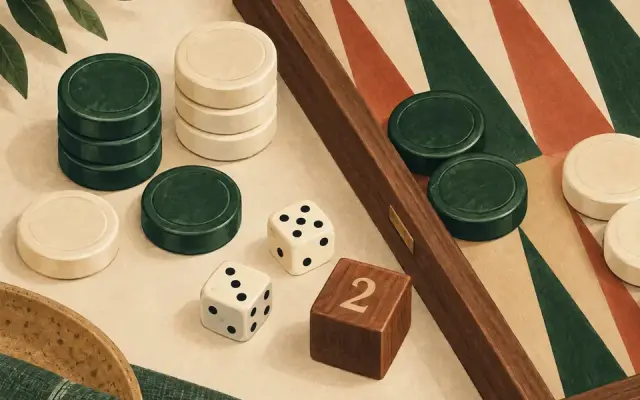
Backgammon rules for beginners: board setup, dice moves, hitting and the bar, bearing off to win — with the 15 opening moves and key terms.
Connect 4
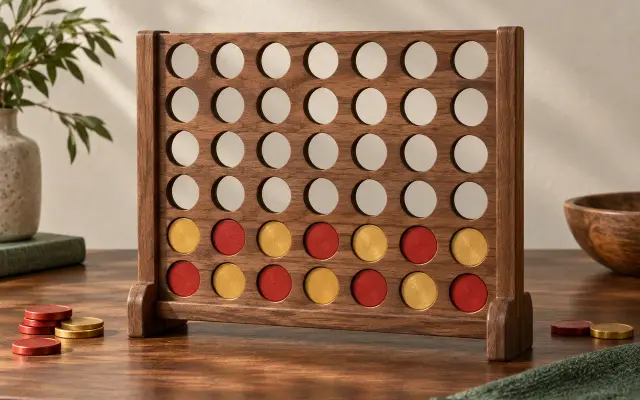
Classic Connect 4 rules: assemble and orient the vertical grid, take turns dropping discs, and make four horizontally, vertically or diagonally.
Also known as Connect Four, Four in a Row, Four-in-a-row
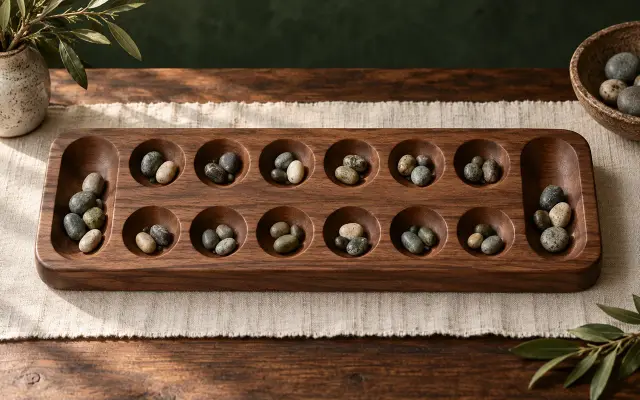
Mancala (Kalah)
Mancala rules for Kalah with four stones per pit: board setup, counterclockwise sowing, extra turns, opposite-pit captures, the end sweep and winning.
Also known as Kalah