
Bananagrams Classic, standard multiplayer rules
How to play Bananagrams
Independent rules summary
Learn how to play Bananagrams Classic, including starting tiles for 2 to 8 players, when to Split, Peel or Dump, and how to call Bananas to win.
On this page
Quick reference
At the table
Ruleset: Bananagrams Classic, standard multiplayer rules
- Goal
- Be the first to use all your tiles in a connected grid of valid words once the pool is low.
- Setup
- Take 21 tiles each with 2–4 players, 15 with 5–6, or 11 with 7–8.
- Turn
- Everyone plays at once. Peel makes everyone draw one tile. Dump lets you trade one tile for three.
- Scoring
- For a best-of-three or best-of-five match, count how many hands each player wins.
- End of game
- With fewer tiles in the pool than players, call Bananas when your grid uses every tile. The others check your words.
Objective
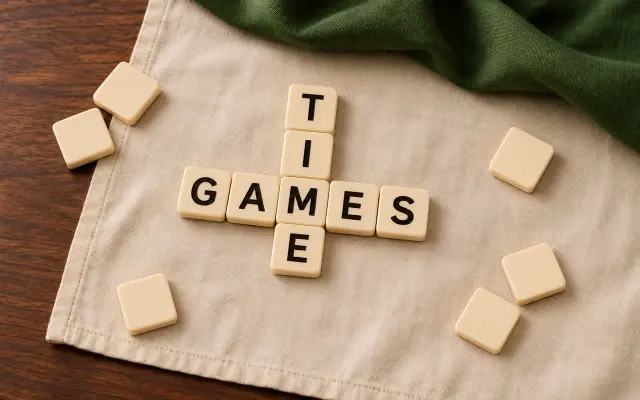
Use all your letter tiles in one connected grid of valid words. In Bananagrams Classic, everyone builds their own grid at the same time. The first player to finish a valid grid once the shared supply runs low wins the hand.
Setup
Mix all 144 letter tiles face down in the middle. This shared supply is called the Bunch. Take your starting tiles from it and leave them face down until play begins.
| Players | Starting tiles each |
|---|---|
| 2–4 | 21 |
| 5–6 | 15 |
| 7–8 | 11 |
Give each player enough room to spread out a grid. Agree on a dictionary before you start so you can settle disputed words quickly.
Turns
There are no turns. When someone calls Split, everyone flips their tiles and starts building. Words run left to right or top to bottom. For example, lay CAT across, then build TAP downward from its T. You can move tiles or rebuild your grid at any time.
When to Peel or Dump
- Peel. When you place your last loose tile and the Bunch still has enough for everybody, call Peel. Each player draws one tile, including you. Anyone still building has to take one too.
- Dump. If a letter is holding you up, call Dump, put that tile face down in the Bunch, and take three tiles in exchange. Only you draw on a Dump. You can make the exchange again later.
Winning
Once the Bunch has fewer tiles than there are players, the first person to fit every tile into a connected grid calls Bananas. The other players check the grid. If they accept it, the caller wins.
If the grid contains an unacceptable word, the caller is a Rotten Banana and is out for the hand. Return all of that player’s tiles to the Bunch face down. Everyone else continues.
Worked example. Four people are playing and six tiles remain in the Bunch. You place your last loose tile and call Peel. All four players draw one, leaving two tiles. If you fit your new tile into your grid first, call Bananas and have the group check your words.
For a longer game, play best of three or five hands.
For a word game where everyone plays on one board and keeps score, see the Scrabble rules.
For a simultaneous race to match pictures, try the Spot It! / Dobble rules.
Common questions
Do you Peel if there is exactly one tile left per player?
Yes, if you’ve just placed your last loose tile. Everyone takes one and the Bunch is empty. From then on, the first player to complete a valid grid can call Bananas.
Do you have to wait for the Bunch to be empty to win?
No. With five players, for example, you can call Bananas with up to four tiles left in the Bunch, as long as every tile you took is in your connected grid.
Can you use names or abbreviations in Bananagrams?
Proper nouns and abbreviations are out under the Classic rules. Settle disputed spellings and ordinary words with the dictionary you agreed to use.
Similar games
Backgammon
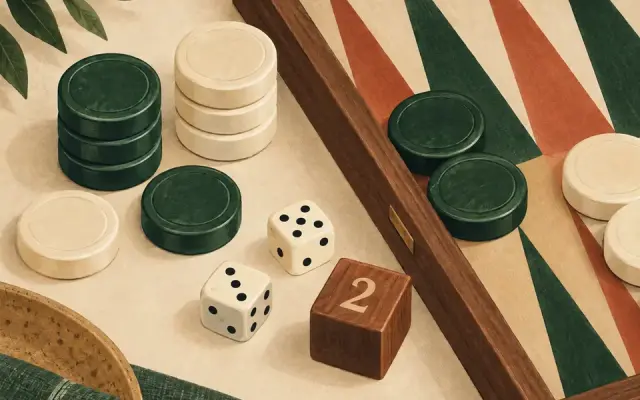
Backgammon rules for beginners: board setup, dice moves, hitting and the bar, bearing off to win — with the 15 opening moves and key terms.
CATAN
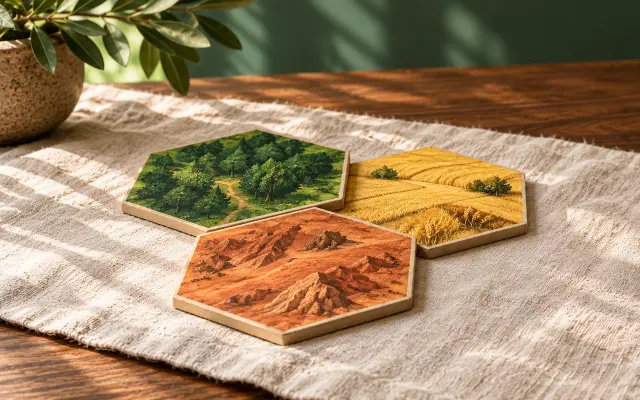
Learn CATAN’s 2025 base-game rules for 3–4 players: setup, resource production, trading, building costs, the robber and how to reach 10 victory points.
Also known as Settlers of Catan
Checkers
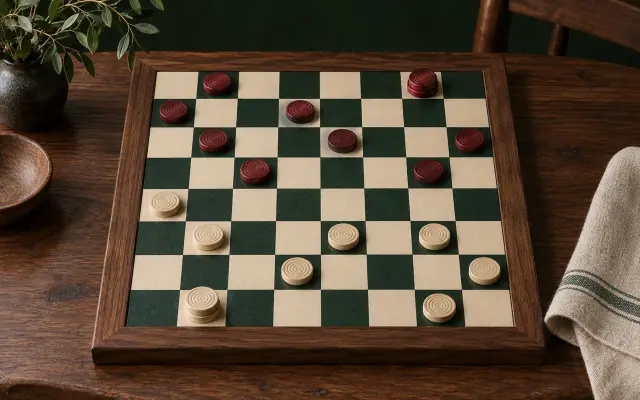
American Checkers rules on an 8×8 board: setup, forward moves, compulsory captures, multiple jumps, crowning, when pieces can move backward and how to win.
Also known as English draughts, Draughts